
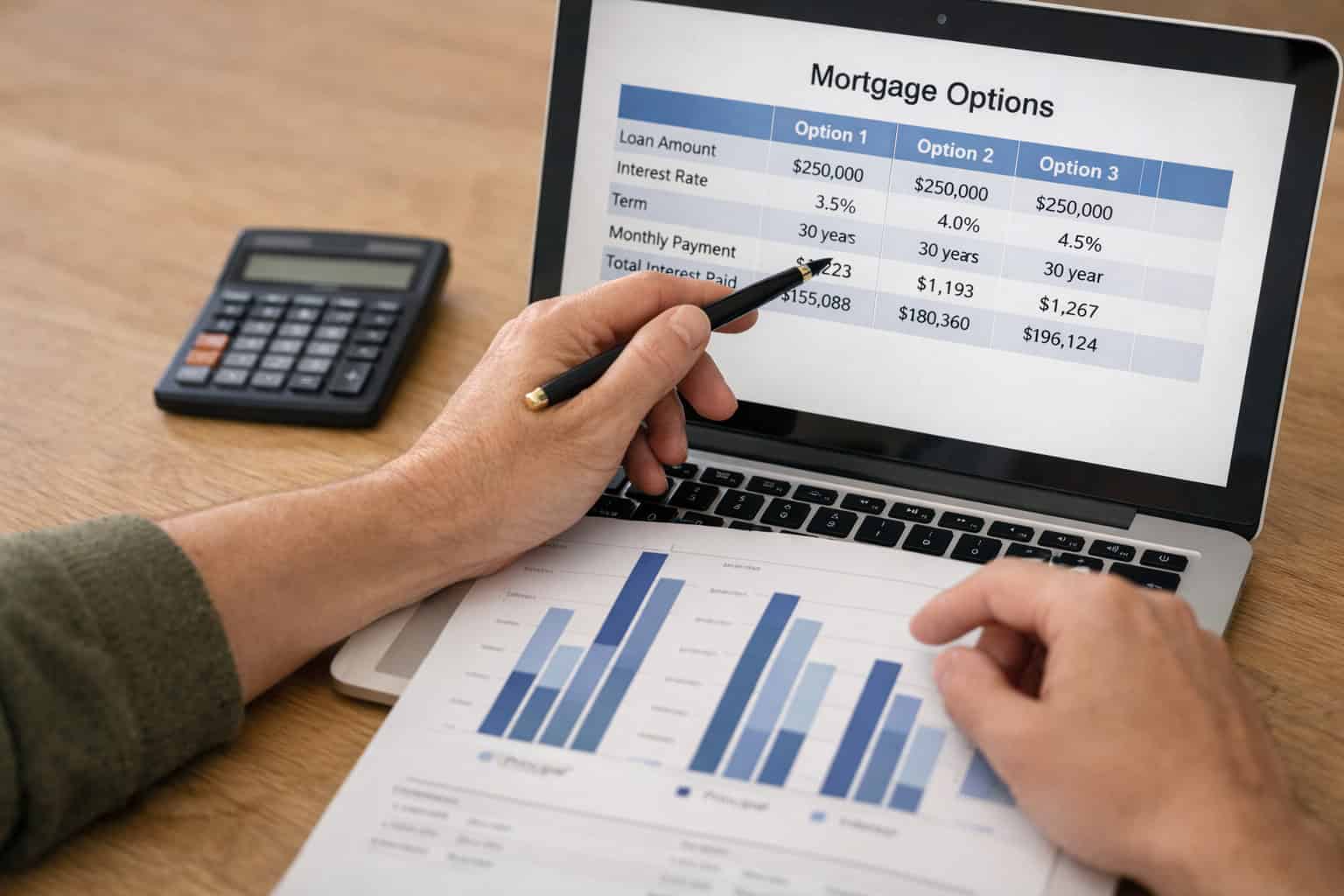
Why Buyers Ask This Question So Often
One of the most common questions buyers ask is simple on the surface:
“Should I buy points to lower my rate?”
The honest answer is: sometimes — but not always, and not for the reasons most people think.
Buying points isn’t inherently good or bad. It’s a financial tradeoff. Understanding when it makes sense (and when it doesn’t) requires looking beyond the rate itself and considering how long you plan to keep the loan, how cash-sensitive you are, and what flexibility you want over time.
What Are Mortgage Points?
Mortgage points are upfront fees paid at closing to reduce your interest rate.
In general:
- 1 point = 1% of the loan amount
- Paying points lowers your interest rate
- The benefit shows up over time through lower monthly payments
Points don’t eliminate interest — they change when you pay it.
You’re essentially prepaying interest in exchange for long-term savings.
The Break-Even Question Most Buyers Miss
The most important concept when evaluating points is the break-even period.
Break-even asks:
“How long does it take for the monthly savings to recover the upfront cost?”
If:
- You plan to keep the loan longer than the break-even → points may make sense
- You plan to refinance or sell before break-even → points usually don’t
This is where strategy matters more than math alone.
Why Buying Points Isn’t Always the Best Use of Cash
Even when points technically “pay off,” they’re not always the best move.
Paying points ties up cash that could otherwise be used for:
- A larger down payment
- Reserves and liquidity
- Home improvements
- Reducing other high-interest debt
In many cases, buyers value flexibility more than maximizing long-term interest savings.
In many cases, buyers value flexibility more than maximizing long-term interest savings.
This is especially true in markets where:
- Future moves are likely
- Rates are volatile
- Refinance opportunities may arise
When Buying Points Often Makes Sense
Buying points may be a good fit if:
- You plan to stay in the home long-term
- You’re confident you won’t refinance soon
- You have excess cash beyond reserves
- The rate reduction meaningfully impacts your payment
This is often the case for:
- Long-term primary residences
- Stable income scenarios
- Buyers prioritizing payment certainty
Even then, it should be evaluated carefully — not assumed.
When Taking a Higher Rate Can Be the Smarter Choice
In many situations, accepting a slightly higher rate is the better strategic move.
This is often true when:
- You expect to refinance in the future
- You’re buying a starter home
- You want to preserve liquidity
- You value flexibility over optimization
A higher rate today doesn’t lock you in forever — especially if the loan is structured with future options in mind.
This is where loan strategy can offset rate decisions.
How Loan Structure Impacts the Decision
Points should never be evaluated in isolation.
Other factors matter, including:
- Loan type
- Term length
- Occupancy
- Down payment strategy
- Long-term plans
Two buyers can make opposite decisions — and both be “right” — depending on how their loans are structured.
This is why working with a mortgage broker can help clarify the tradeoffs. A broker can compare multiple pricing options across lenders and frame the decision around your timeline and goals — not just today’s rate.
Points, Rates, and Affordability
Lowering your rate lowers your payment — but it doesn’t always change what you can comfortably afford.
Before committing cash to points, it’s worth stepping back and confirming:
- Your target monthly payment
- Your comfort level with future changes
- How sensitive your budget is to rate movement
If you haven’t already, reviewing how much house you can really afford helps anchor these decisions in reality.
A Smarter Way to Decide
Instead of asking:
“Should I buy points?”
Ask:
- How long will I realistically keep this loan?
- What does this cash do for me elsewhere?
- Do I value certainty or flexibility more?
- How does this fit into my broader plan?
When framed this way, the decision becomes much clearer.
Common Questions About Buying Mortgage Points
Buying points means paying upfront fees at closing to reduce your interest rate. You’re essentially prepaying interest in exchange for lower monthly payments over time.
It depends on how long you expect to keep the loan. After that, it is a simple math problem. If you plan to sell or refinance before reaching the break-even point, buying points often doesn’t make sense.
That depends on your priorities. Some buyers value lower monthly payments, while others prefer liquidity and flexibility. There’s no universal “right” answer — it’s a strategic decision.
Yes. Many buyers choose a higher rate initially to preserve cash and plan to refinance if rates improve. This approach can make sense depending on timing and market conditions.
Get Clarity Before You Lock Anything In
Points are permanent — rates are not.
A short strategy conversation can help you:
- Compare real scenarios
- Understand break-even timelines
- Align the decision with your long-term plan
If you want to talk through your options before locking a rate, start with a Mortgage Strategy Call.